




How Precision Metal Tube Bending Supports Data Center Liquid Cooling Systems
How Precision Metal Tube Bending Supports Data Center Liquid Cooling Systems
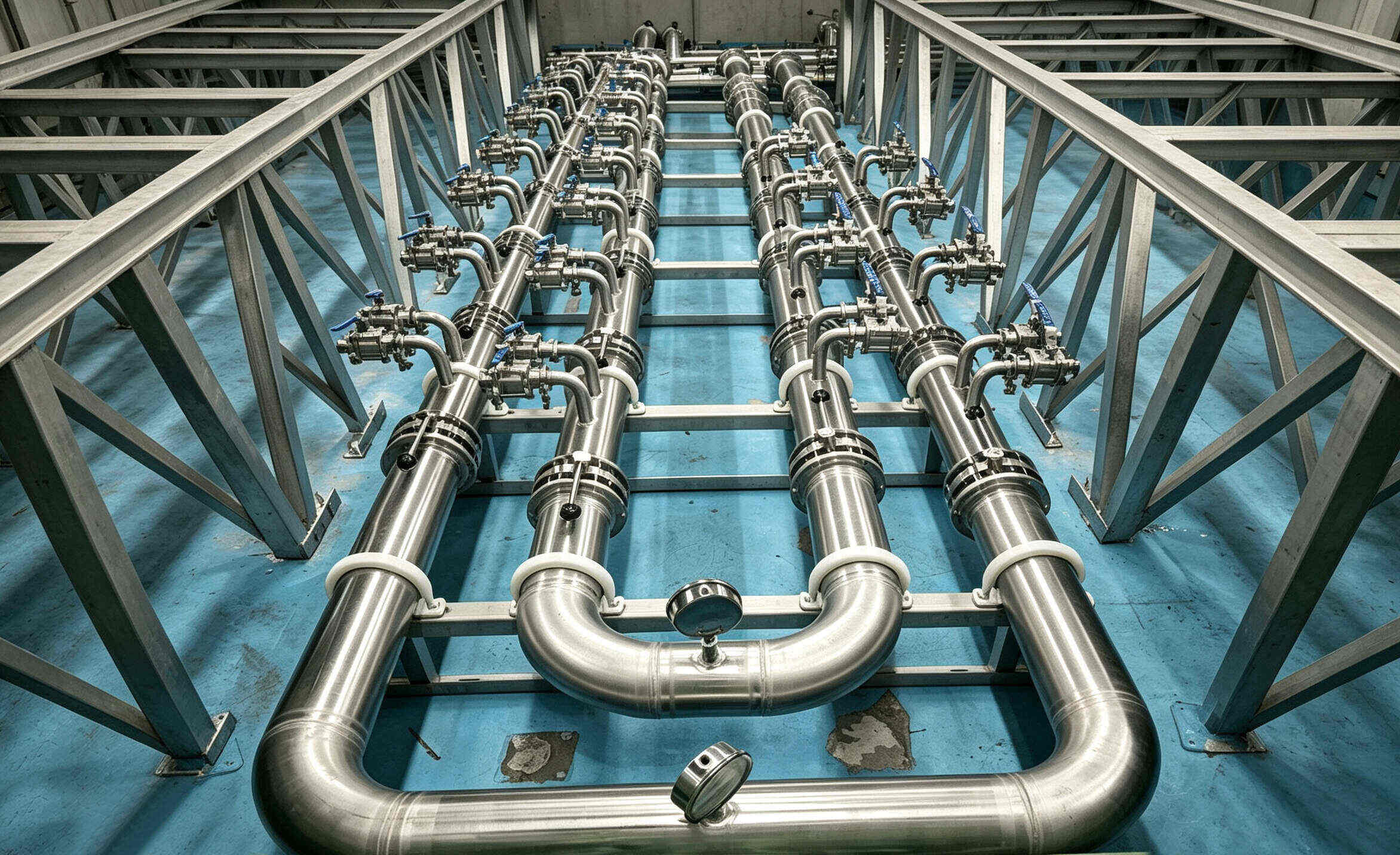
As AI servers become more powerful, data center rack densities continue to increase. Traditional air cooling is increasingly being supplemented or replaced by direct-to-chip liquid cooling, in which coolant is delivered through a network of pipes, tubes, hoses, manifolds, quick connectors, and cold plates.
As these systems become more compact, one engineering challenge is receiving increasing attention: how to route cooling lines through increasingly constrained spaces without compromising flow, reliability, or serviceability.
For tube and pipe manufacturers, this creates a new requirement. Liquid cooling piping is no longer simply about transporting coolant from point A to point B. The geometry, bend radius, material, wall thickness, connection design, and manufacturing accuracy can all influence the performance and reliability of the cooling system.
At PINO Metal, our expertise is rooted in metal tube bending and custom metal tube fabrication for automotive, industrial, and other demanding applications. We see data center liquid cooling as another application where precision tube bending and engineered pipe assemblies can provide value alongside flexible tubing and hose solutions.
Why Tube Routing Matters in Liquid Cooling Systems
A typical liquid cooling system may include a cooling distribution unit (CDU), supply and return manifolds, cooling lines, cold plates, and multiple connections. In a high-density rack, these components must fit into a limited installation envelope. The cooling pipes therefore need to follow defined routes around:
- Server components
- Rack structures
- Manifolds
- Cold plates
- Electrical and mechanical components
- Quick-disconnect fittings
- Maintenance access areas
Poor routing can create unnecessary bends, excessive pressure loss, mechanical stress, or interference with other components.
For this reason, liquid cooling pipe design should consider both hydraulic performance and physical routing from the beginning. Parker's technical guidance for data center cooling specifically identifies minimum bend radius as an important design parameter. It notes that the tightest bend in the actual routing should be identified to reduce the risk of kinking, while material flexibility, wall thickness, and reinforcement can all affect bend radius.
Bend Radius Is More Than a Manufacturing Parameter
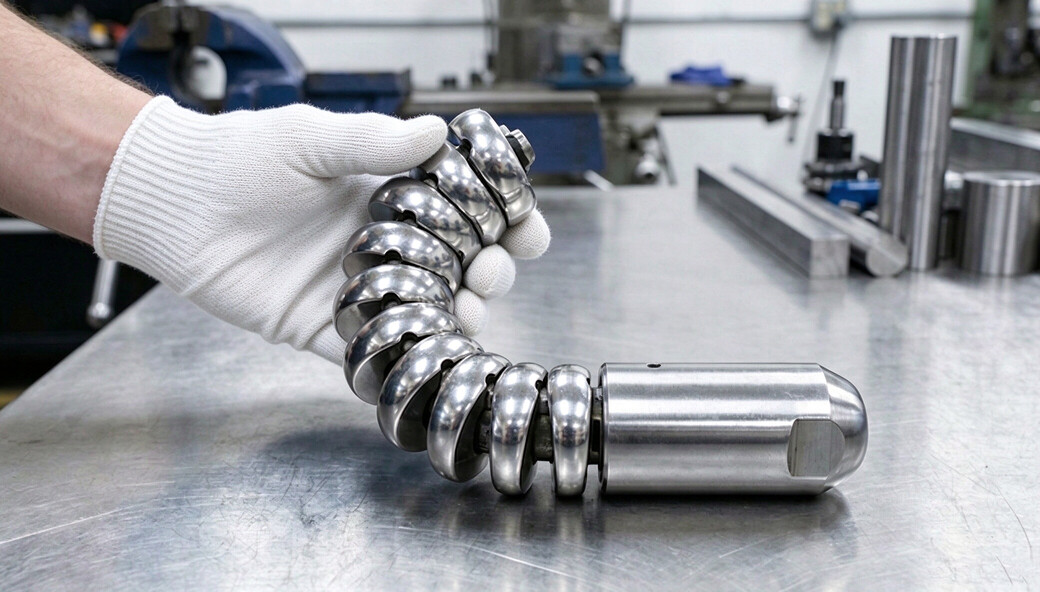
In tube bending, bend radius describes the curvature produced when a straight tube is formed into a specific shape. For liquid cooling applications, however, bend radius has a broader engineering meaning.
An overly tight bend can potentially:
- Reduce the internal flow area
- Increase pressure drop
- Create local deformation
- Concentrate mechanical stress
- Interfere with fittings or connections
- Increase the risk of kinking in flexible tubing
- Make installation and maintenance more difficult
This is particularly important in compact AI server environments.
Flexible liquid cooling hoses can provide excellent routing flexibility. Some commercial data center cooling hoses are specifically engineered for tight spaces. For example, Gates lists a minimum bend radius of 15 mm for one of its small-diameter Data Master cooling hose configurations.
However, minimum bend radius is not a universal number. It varies according to tube or hose diameter, wall thickness, material, reinforcement structure, temperature, pressure, and construction.
Does a smaller bend radius always mean a better liquid cooling pipe? No. A smaller bend radius is not automatically better. The allowable bend radius depends on tube diameter, wall thickness, material, bending method and the required internal flow area.
For rigid metal tubes, the engineering approach is different: rather than forcing the tube to conform during installation, manufacturers can form the required geometry during production.
This is where precision metal tube bending becomes valuable.
Metal Bent Tubes and Flexible Hoses Serve Different Purposes
It is important to distinguish between rigid metal cooling pipes and flexible liquid cooling hoses. Flexible hoses are highly suitable for applications requiring frequent movement, compact routing, vibration isolation, or easy installation. Their ability to accommodate complex paths makes them useful inside racks and around serviceable components.
Metal tubes, on the other hand, can provide:
- Consistent dimensional geometry
- High structural stability
- Controlled routing
- Strong resistance to external deformation
- Long-term shape retention
- Compatibility with demanding temperature and pressure environments
- Clean and repeatable installation
Therefore, the future of liquid cooling should not necessarily be viewed as a choice between metal pipes and flexible hoses. A well-designed cooling system can use both. Flexible tubing can handle sections where movement and tight routing are required, while precision-bent metal tubes can be used where stable geometry, structural support, repeatability, and controlled routing are more important.
This hybrid approach is particularly relevant to complex liquid cooling assemblies.
When should engineers choose a rigid bent metal tube instead of a flexible hose?
| Requirement | Rigid Bent Metal Tube | Flexible Hose |
|---|---|---|
| Very tight routing | Good | Excellent |
| Shape retention | Excellent | Limited |
| Vibration isolation | Moderate | Excellent |
| Dimensional repeatability | Excellent | Moderate |
| Structural support | High | Low |
| Complex 3D routing | Excellent with CNC bending | Excellent |
| Long-term fixed routing | Excellent | Good |
| Custom OEM tube assembly | Excellent for repeat production | Good |
Precision Tube Bending for Compact Cooling System Design
A major advantage of CNC tube bending is the ability to transform a straight tube into a repeatable three-dimensional geometry. Instead of connecting several straight pipes with multiple elbows, a custom bent tube can potentially integrate multiple bends into a single component.
This can help reduce:
- The number of joints
- Potential leak points
- Assembly operations
- Installation space
- Additional fittings
- Alignment problems
For example, a cooling line may require several directional changes to connect a manifold to a cold plate. Rather than using multiple straight sections and fittings, a custom bent tube can be designed around the actual installation envelope. This concept is already common in other demanding industries such as automotive, industrial equipment, heavy-duty vehicles, and machinery. The same manufacturing principles can be applied when developing custom liquid cooling pipes and tube assemblies.
Tube Geometry Can Influence Coolant Flow
Mechanical routing and fluid dynamics cannot be considered separately. The internal diameter of a cooling tube directly affects volumetric flow and pressure drop. Parker's technical guidance notes that ID is important when predicting cooling performance, while the OD becomes critical where space is limited inside a server blade or rack. This means that a tube designer needs to consider more than the nominal tube size.
Key parameters may include: Tube ID + OD + wall thickness + bend radius + bend angle + tube length + material + connection geometry
A poorly designed bend may create unnecessary flow resistance, while excessive tube length can increase pressure losses and consume valuable installation space. For this reason, liquid cooling pipe bending should be treated as part of the overall cooling-system design rather than as an isolated fabrication process.
Why CNC Tube Bending Matters
For complex cooling pipe geometries, CNC tube bending provides several advantages over manual forming.
A CNC tube bending process can control:
- Bend angle
- Bend radius
- Bend sequence
- Tube rotation
- Straight lengths between bends
- Dimensional repeatability
For OEM and custom projects, this repeatability is particularly important. Once a cooling pipe has been designed around a specific rack or manifold layout, dimensional consistency becomes essential for assembly. Even small deviations can make multiple tubes difficult to install when the available space is limited.
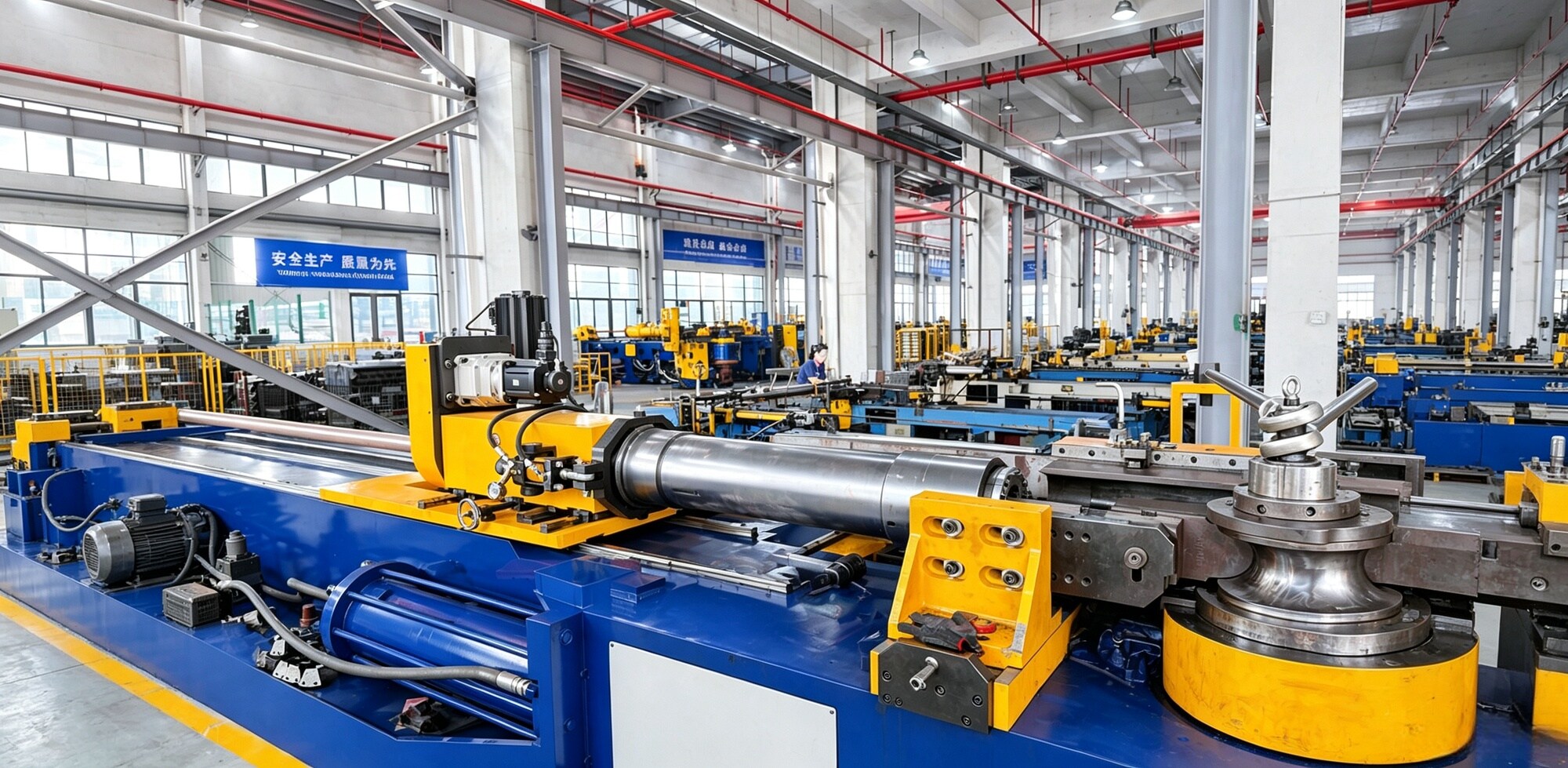
At PINO Metal, our tube processing capabilities include CNC tube bending, tube cutting, laser tube cutting, forming, welding, polishing, and surface treatment, allowing different metal tube components to be developed according to the requirements of the final application.
PINO Metal works with tube diameters from 0.5 to 10 inch, different wall thicknesses, stainless steel, aluminum and carbon steel, and can produce multi-bend tube geometries according to customer drawings.
Metal Materials for Custom Bent Tubes
The appropriate material depends on the coolant, temperature, pressure, corrosion environment, required strength, weight, and manufacturing requirements.
Common metal options for tube and pipe applications include:
Stainless Steel Tubing:
Stainless steel tubing is widely used where corrosion resistance, durability, and dimensional stability are important.
Common grades include: 304 stainless steel, 316 stainless steel, 409 stainless steel, etc.
For liquid cooling applications, material selection should always be evaluated against the actual coolant chemistry and operating conditions.
Aluminum Tubing:
Aluminum offers low density and good thermal conductivity, making it attractive when weight and heat transfer considerations are important.
It can also be formed into complex tube geometries when the appropriate alloy and bending process are selected.
Carbon and Mild Steel Tubing:
Carbon steel and mild steel tubes can provide strength and cost advantages for industrial cooling and fluid-handling applications where corrosion protection and system requirements permit their use.
Therefore, there is no single "best" material for every cooling pipe. The correct material depends on the complete application.
From Flexible Routing to Precision Metal Piping
The development of AI data centers is driving innovation across the entire cooling supply chain.
Flexible hose manufacturers are developing products with smaller outer diameters, improved flexibility, and tighter minimum bend radii. Gates, for example, has introduced data center cooling hose products designed for constrained routing, including large-diameter solutions that target tighter bend radii while reducing the risk of kinking and flow restriction.
At the same time, liquid cooling engineers continue to evaluate how tubing size, routing, bend radius, connection geometry, and material selection affect system performance.
This creates opportunities for both flexible tubing manufacturers and precision metal tube manufacturers.
For metal tube suppliers, the opportunity is not to replace every flexible hose.
Instead, it is to provide custom-engineered metal tube components where rigidity, dimensional accuracy, repeatable geometry, durability, and controlled routing offer a system-level advantage.
What Should Engineers Consider When Selecting a Liquid Cooling Tube Supplier?
When sourcing custom cooling pipes or bent tubes, engineers should consider more than price and material.
Important questions include:
- What tube materials and sizes can the supplier process?
- What bend angles and bend radii are achievable?
- How accurately can the supplier control tube geometry?
- Can the supplier produce multi-bend 3D tube assemblies?
- Can the supplier provide cutting, forming, welding, and finishing?
- Can prototypes be developed before mass production?
- Can the supplier maintain dimensional consistency across production batches?
- Can the tube geometry be optimized for the available installation space?
- Can material and surface treatment be adapted to the application environment?
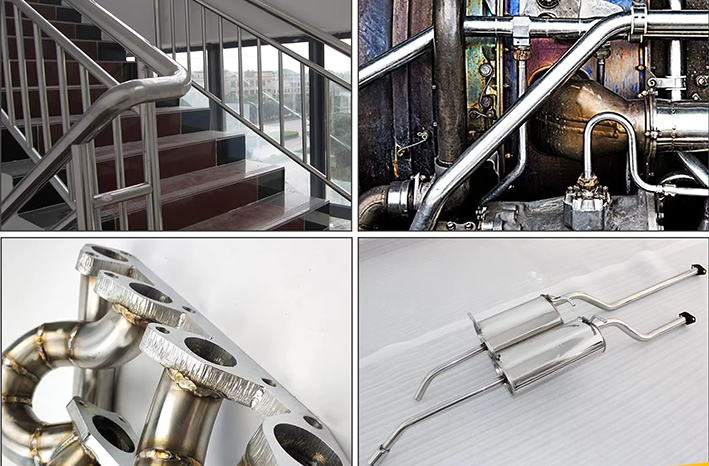
These questions are relevant not only to data center liquid cooling, but also to automotive exhaust systems, industrial machinery, construction equipment, marine systems, and other fluid-handling applications.
PINO Metal: Custom Metal Tube Bending Beyond Data Center Cooling
PINO Metal is a metal tube and pipe component supplier serving multiple industries rather than a company focused exclusively on data center cooling. Our core expertise includes mandrel bending, CNC tube bending, metal pipe bending, tube cutting, laser tube cutting, welding, polishing, and surface treatment.
We manufacture custom metal tube components for applications including:
- Data center cooling applications
- Automotive exhaust systems
- Truck exhaust pipes and stacks
- Industrial equipment
- Machinery
- Structural and fabricated components
- Fluid-handling systems
Our experience with complex tube geometries allows us to approach liquid cooling projects from a broader manufacturing perspective.
For applications where flexible hoses are the best solution, flexibility and minimum bend radius may be the primary considerations. Where rigid, repeatable geometry is required, precision-bent metal tubing can provide a complementary solution.
The key is to select the right tube construction for the actual system requirements.
The Future of Liquid Cooling Pipe Design
As AI infrastructure continues to increase rack power density, liquid cooling systems will need to become more compact, reliable, serviceable, and easier to manufacture. This will increase demand for engineered components rather than simple commodity tubing.
The future cooling assembly may combine:
Flexible hoses + precision-bent metal tubes + manifolds + quick connectors + cold plates + custom fittings
The common engineering challenge is the same: move coolant efficiently through a limited space while maintaining reliability and serviceability. For tube manufacturers, this means that precision bending is becoming more than a manufacturing capability. It can become part of the engineering solution.
At PINO Metal, we continue to apply our metal tube bending and fabrication expertise across different industries, helping customers develop custom tube components according to their required dimensions, materials, geometry, and production needs. Whether the application is a truck exhaust pipe, industrial tube assembly, or a custom cooling pipe for high-density computing infrastructure, the principle remains the same: the right tube geometry starts with understanding the application.