




Exploring the Different Types of Exhaust Bends
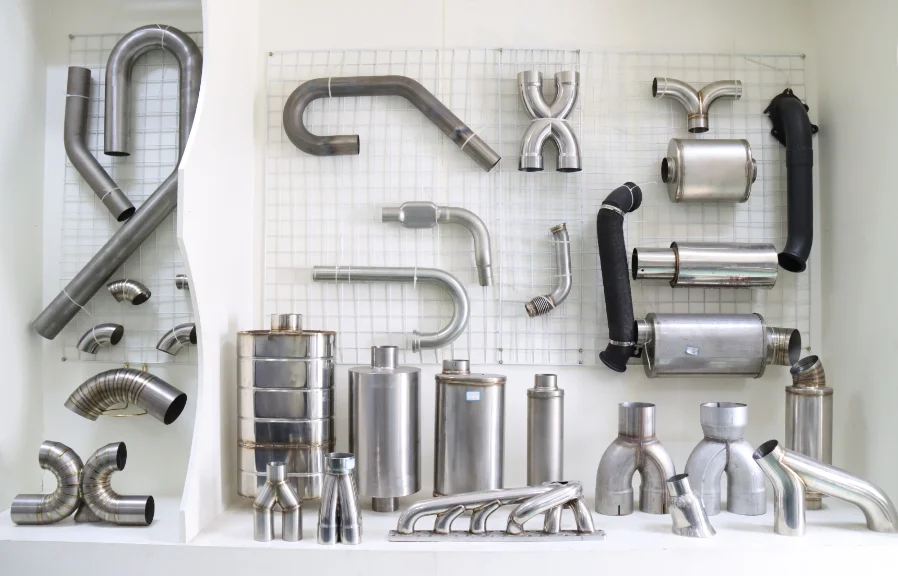
The Crucial Role of Exhaust Bends
Exhaust bends are pivotal components in any vehicle's exhaust system, facilitating the smooth and efficient flow of
exhaust gases from the engine to the tailpipe. These bends serve as connectors between straight sections of exhaust pipes,
allowing the exhaust gases to navigate around obstacles, such as chassis components or other parts of the vehicle's structure.

Mandrel Bends: Precision and Performance
Mandrel bends are known for their precision shaping and maintenance of consistent diameter throughout the bend.
Unlike crush bends, which can lead to reduced exhaust flow due to deformation, mandrel bends maintain a smooth
inner surface. This optimal flow characteristic minimizes turbulence and restriction, which ultimately enhances engine
performance.
Mandrel bending involves inserting a mandrel—a solid rod—into the pipe during the bending process. This ensures
that the inner diameter of the pipe remains consistent, preserving exhaust gas flow efficiency. Mandrel bends are
particularly popular among performance enthusiasts who seek to maximize horsepower and torque gains.
Crush Bends: Trade-offs and Considerations
Crush bends, also referred to as press bends or crush-cut bends, are created by bending a straight pipe without any
mandrel or support. While this bending technique is simpler and more cost-effective, it has some trade-offs in terms
of performance. The bending process can cause the inner diameter to become slightly reduced or distorted, leading
to turbulence and exhaust flow restrictions.

Crush bends are often utilized in applications where performance gains are not a primary concern, such as in stock exhaust
systems or pipes with more moderate demands. However, for those aiming for optimal performance, mandrel bends remain
the preferred choice.
Types of Mandrel Bends
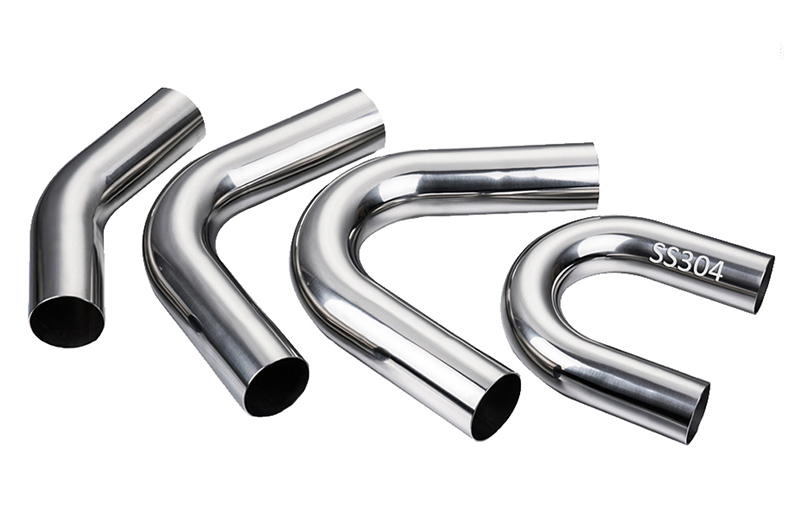
Within the realm of mandrel bends, several specific types cater to different needs and applications:
1. U-Bends
U-bends are characterized by their U shape and are often used to navigate around obstacles in the vehicle's undercarriage.
These bends allow exhaust pipes to clear suspension components, chassis frames, and other structural elements without
compromising the exhaust gas flow.
2. J-Bends
J-bends resemble the letter J and are popular in custom exhaust setups. They provide more flexibility in routing exhaust
pipes and can be used to create intricate exhaust systems for various vehicle types.

3. 45-Degree and 90-Degree Bends
45-degree and 90-degree bends refer to the angle at which the pipe is bent. These bends are versatile and can be used
to direct exhaust gases in specific directions while maintaining efficient flow.
4. Custom Bends
Custom bends offer the flexibility to create exhaust systems tailored to specific vehicles or performance goals. These bends
are often utilized by enthusiasts and professionals seeking to optimize exhaust flow for maximum efficiency and power.